
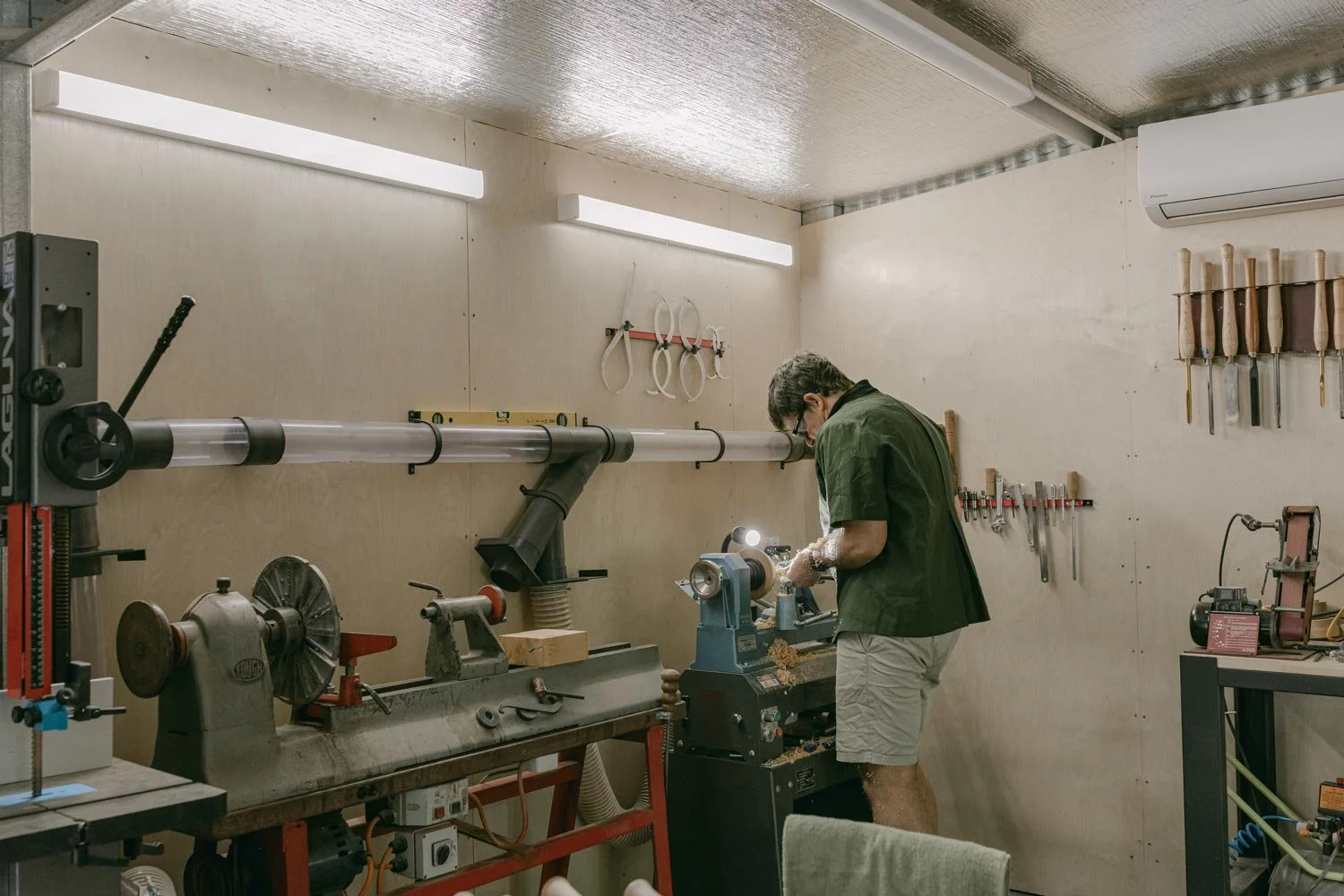
Take a peek into my woodturning studio
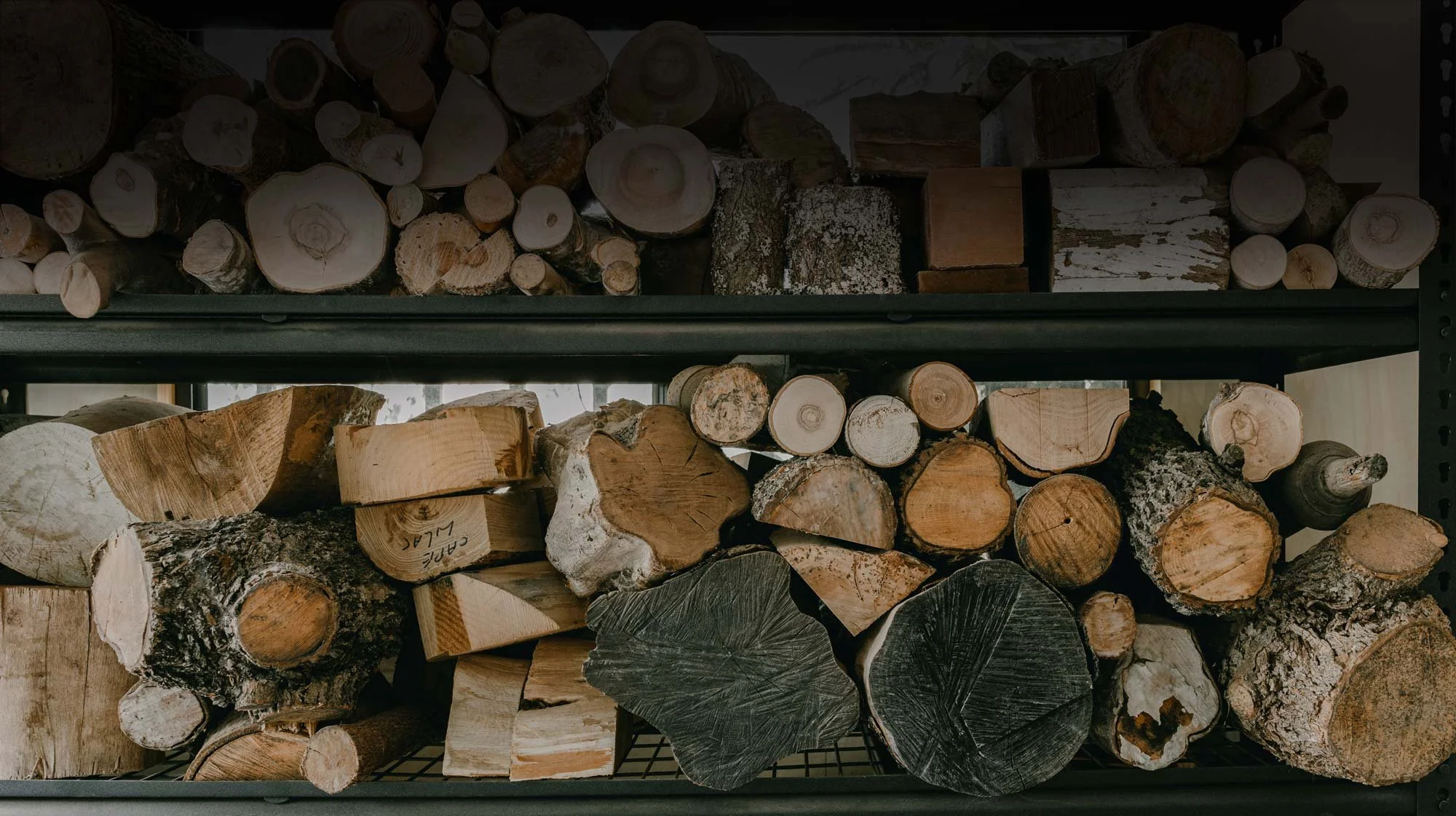
Choosing the right timber is the first decision I make with every piece. To give you the best homewares to celebrate the beautiful natural materials Australia provides, I only work with sustainably sourced or reclaimed timber. These come from reputable Australian suppliers, chosen for the character they bring to the finished piece.
Some have been recovered from submerged Tasmanian forests. Some have been gifted from private properties or felled trees.
Each one is different, and that difference is what you see and feel in the bowl, platter or cake stand that fills your home with love.
Learn more about the types of timber I use, and how they make your pieces memorable and special.
THE STORY BEHIND SUSTAINABLE AUSTRALIAN TIMBER for your homewares
Explore the timbers, where they come from, and what they look like in your home
Discover the Australian timbers behind your next handcrafted homeware…
Huon Pine “The Prince of Tasmanian timbers”
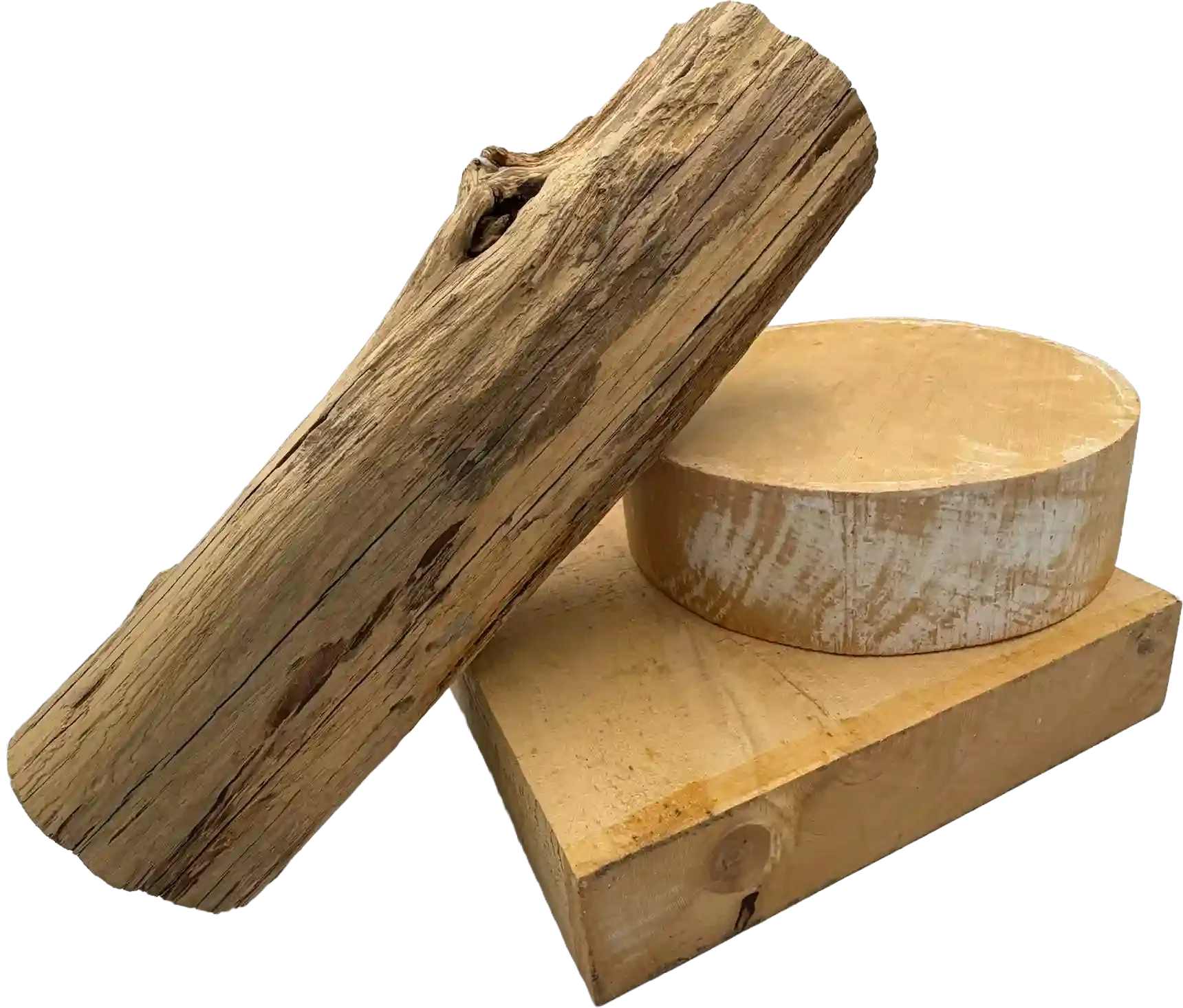
Huon Pine is one of the oldest and most treasured timbers in Australia, with trees believed to be over 3,000 years old.
For centuries, it was the timber of choice for boat-building and fine furniture, valued for its longevity and the understated beauty of its grain. The Huon Pine used in my woodturning studio is recovered from Tasmania's submerged forests, hydro lakes and the Gordon River, making it one of the most responsibly sourced timbers available anywhere in Australia.
A wooden bowl or platter turned from Huon Pine carries that heritage with it. Its warm tones take their place beautifully in a modern kitchen or on your dining table. Its natural oils give it an inherent resistance to moisture, making it well-suited to homewares you plan to use and enjoy for years to come.
-
Only found in the wet southeast corner of Tasmania.
-
Fine, straight, and uniform, allowing for detailed, precise work in every piece.
-
Pale straw to soft golden yellow, deepening and richening with age.
-
Naturally decay and moisture-resistant, making it a reliable choice for homewares used in the kitchen and in commonly used rooms of your home.
-
Fine furniture and is considered one of the easiest and most versatile premium timbers to work with. Its golden colour, delicate nature and light weight make it perfect for a variety of pieces like all-purpose bowls, platters, cake stands and natural-edged bud vases. It has a beautiful ‘bird’s eye’ feature that gives any piece an extra special touch.
I strive to minimise wastage of this beautiful, rare resource. So to make the most of every last piece of Huon Pine in my studio, I plan to create handcrafted jewellery, such as necklaces and brooches, in the near future. Made from Huon Pine offcuts, the jewellery will highlight the timber's intricate natural details, giving you a lightweight, unique and sustainable alternative to metal jewellery.
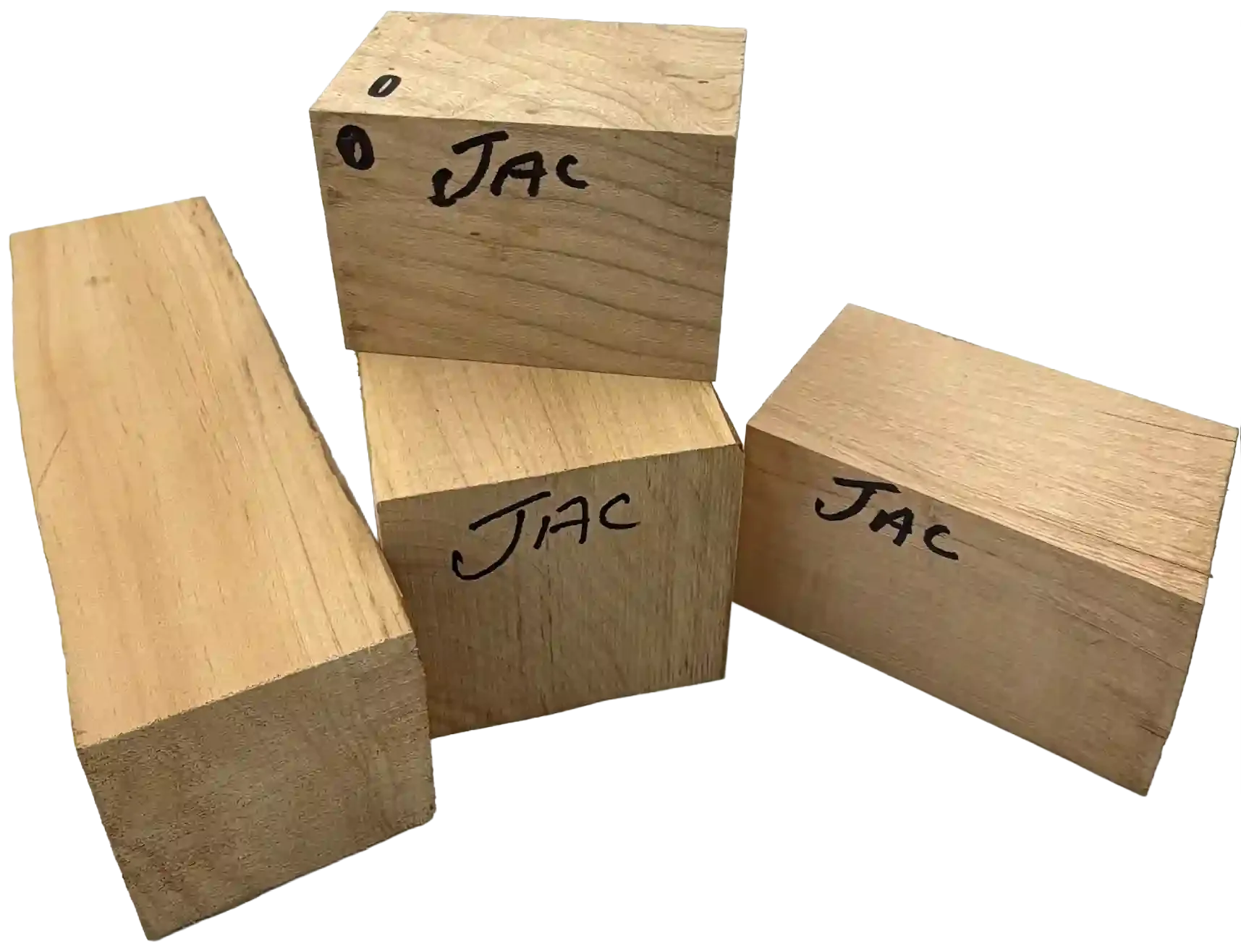
Jacaranda
Jacaranda trees have been growing in Australian soil for over 150 years.
Brought here by sea captains sailing from South America, it is now woven into the Australian landscape as recognisably as the violet flowers that line suburban streets every spring.
For the homeware pieces in my collections, I use Jacaranda timber from trees felled on private properties or gifted to the woodturning community, giving it a second life.
The timber itself brings warmth and character with a new purpose. The light to medium brown tones carry subtle red hues and a golden depth that sits well in a considered, well-loved home, and responds to finishing oils in a way that brings out the uniqueness of the grain.
-
Native to South America but has been growing across Australia, particularly in Western Australia, for over 150 years.
-
Straight with the occasional wave, producing a fine, smooth finish in every piece.
-
White, cream or light to moderate brown with a golden warmth. Sometimes subtle red hues are present, and the colours deepen into a rich patina with age. Due to its pale colour, Jacaranda gives a modern, Scandinavian-style appearance.
-
Durable with moderate wear resistance, making it a practical choice for everyday homewares.
-
Salad, fruit, or decorative bowls, platters and cake stands. Jacaranda is easy to work with, though its fine grain can cause tear-out when cutting. However, using sharp tools, it finishes beautifully, giving you lovely pieces with fine details.
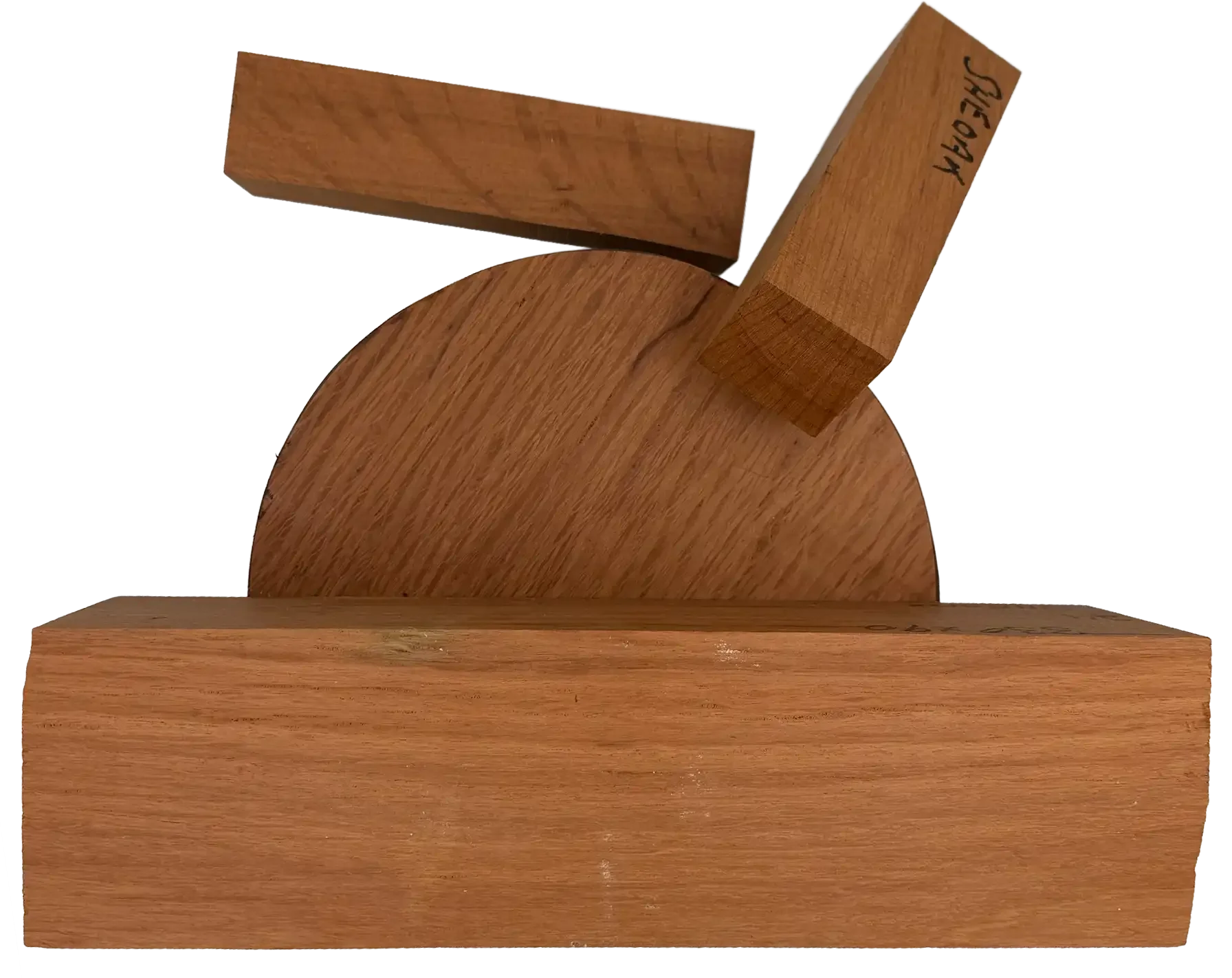
Western Sheoak
Sheoak trees can live for over a century.
The timber has a straight grain, but displays a stunning lacewood pattern and subtle shimmer, bringing warmth, character and individuality to every piece.
It's easy to carve, sands smoothly and polishes nicely, resulting in a top-quality finish that makes decorative pieces stand out on the shelves in your home, or functional pieces easy to use.
Because of its straight grain and moderate density, it turns and finishes well, making it a beautiful choice for everyday kitchen utensils.
-
Found in Western Australia and grows in the southwest from Jurien Bay to Albany.
-
Straight, with a uniform to fine texture and moderate natural lustre.
-
Pink to reddish brown.
-
Highly durable and suitable for heavier homewares, but also adapts well to lighter homewares because of its fine texture.
-
Any woodturned piece, especially spoons, knife handles and honey dippers. In larger pieces such as bowls, platters, and cake stands, the distinctive grain and timber’s natural beauty stand out in any room.
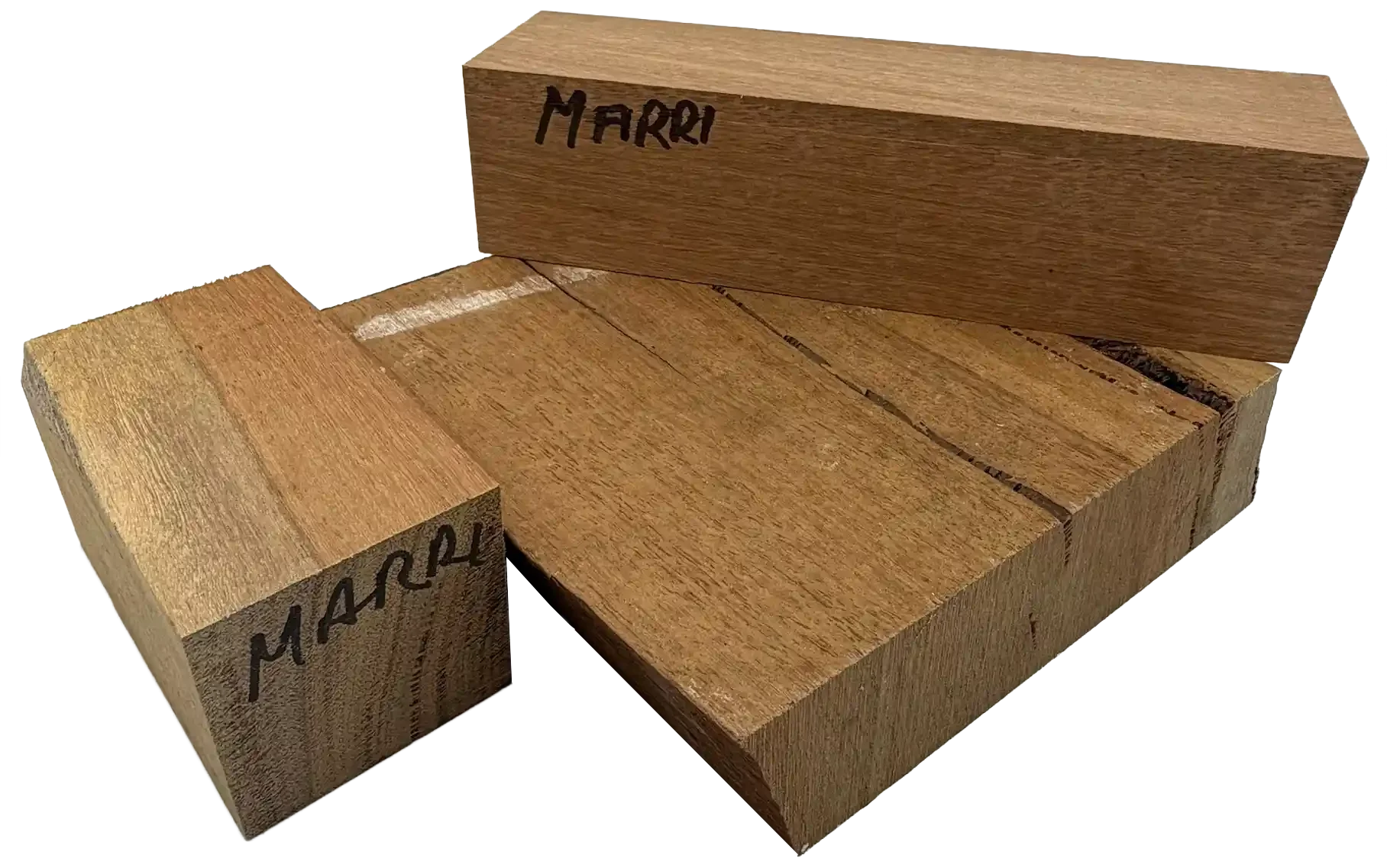
Marri
Marri timber is a durable hardwood that is often chosen for high-end furniture thanks to its rich character and natural beauty.
What makes it one-of-a-kind is its natural gum veins. It creates patterns that tell stories of nature's artistry, making it a joy to work with.
The warm honey tones and natural dark gum veins make every piece look completely unique. With its dramatic markings and deep colours, it brings life to your dining table with decorative servingware, including all-purpose bowls, fruit bowls, and cake stands, made in my woodturning studio.
-
Sustainably sourced and often repurposed from WA forests, it is native to Western Australia, Geraldton, Narrogin, Cape Riche, Darling Scarp, and Swan Coastal Plain.
-
Gum veins and a coarse, slightly interlocked grain that can create sophisticated, curly patterns.
-
Creamy brown to honey-yellow with a pale sapwood and notable dark ‘kino’ gum vein, which brings an extra special standout touch to any piece displayed in your home.
-
Robust and highly decay and insect-resistant.
-
Modern household furniture, but the finished honey colour with the vein structure stands out beautifully in small or large serving bowls, fruit bowls, and cake stands.
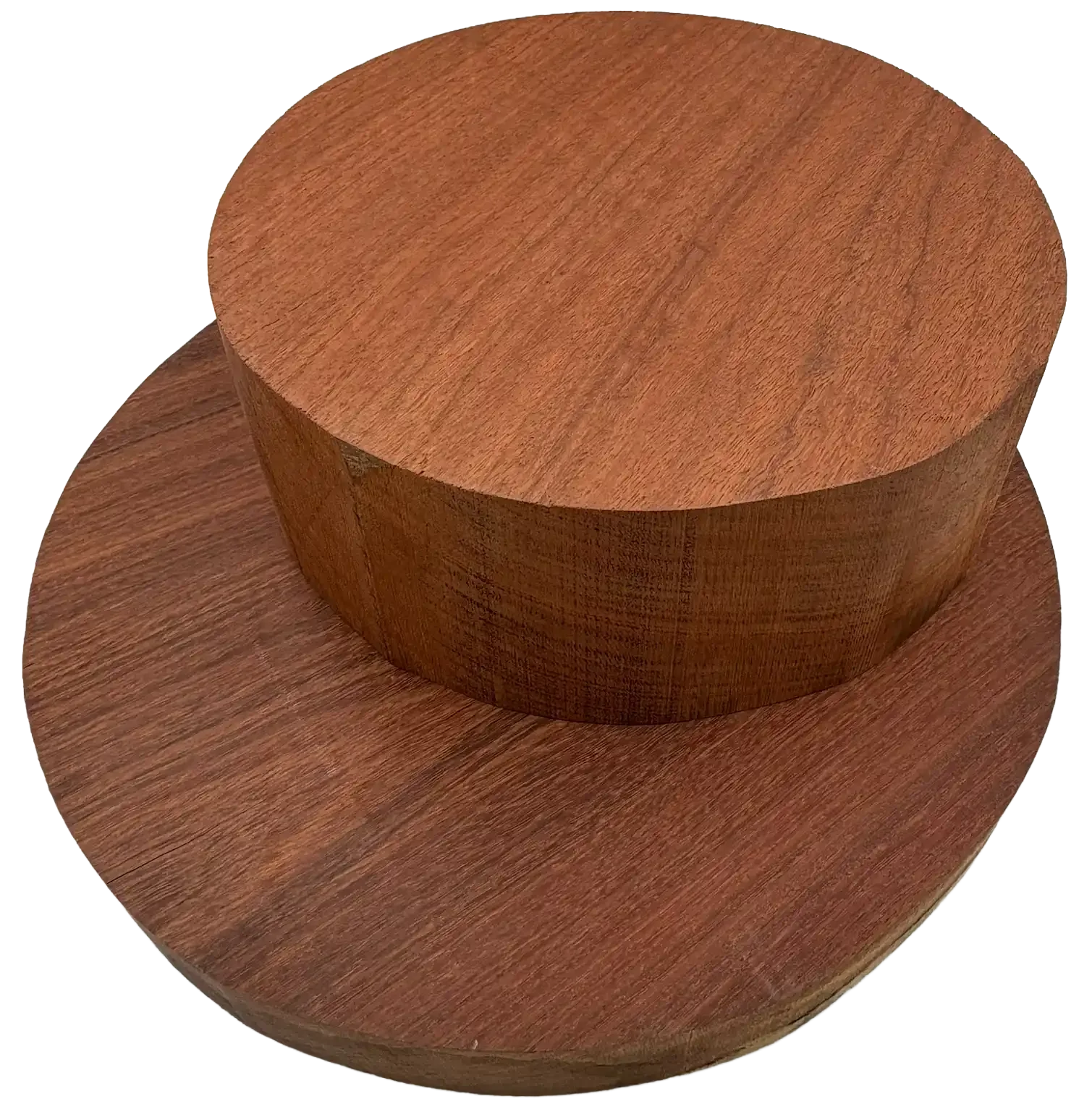
Jarrah
Jarrah is a charming, richly coloured Australian hardwood, loved for its deep red tones, strength, and natural resilience.
It is widely popular because it produces durable, highly resistant woodturned pieces with incredible depth and character, which appear prominently on homewares such as cheeseboards, serving bowls, fruit bowls, platters, cake stands and rolling pins.
Its density, dustiness and high silica content can make it challenging to work with, but it’s worth it, because the finished results are smooth and stunning. Jarrah homewares mature in beauty over time, which makes them an unmatched choice for pieces in your home that stand the test of time.
-
Grown and harvested in southwest Australia. The trees can be found from Gingin, north of Perth, to Albany on the south coast.
-
Dense, interlocked or wavy with a medium to coarse texture. Some pieces may contain gum pockets or streaks as naturally occurring defects, but this just adds to the charm!
-
Light red to brown, to a darker red.
-
Extremely durable, insect and decay-resistant. Jarrah also feels heavier in weight than other timbers. This gives it strength without compromising its natural beauty.
-
Because of its high strength and long-term wear, Jarrah is highly versatile and works best in pieces such as small or large serving bowls, fruit bowls, platters, cake stands and rolling pins.
AUSTRALIAN TIMBER FAQS
-
Timber is a natural wood that has been prepared for use in homewares, furniture, construction and more. There are many different types of timber, each with its own unique grains, textures, character and stories.
When we talk about recycled timber being used, it means that the wood has been reclaimed from its original source, whether it’s a fallen tree, a private property, or, in the case of Huon Pine, submerged Tasmanian lakes and rivers.
All the timber I use in my woodturning studio is sustainable and sourced right here in Australia, showing off the stunning natural materials we have available to us.
-
Timber is renewable and can be regrown and responsibly managed over time. In Australia, sustainably sourced or recycled timber helps reduce waste and environmental impact, especially when strict guidelines and proper forestry management practices are in place.
-
The most sustainable timber for making wooden homewares is reclaimed or recycled timber, e.g:
Salvaged timber from old buildings or furniture
Timber that has been freshly cut or felled locally
Timber saved from being chipped or made into mulch.
Jacaranda, Sheoak and Jarrah from metropolitan Perth are great, sustainable choices. Often, members of the public donate fresh-cut timber to our group. It gets stored appropriately and dried before being transformed into charming homewares, finding a new, meaningful purpose for your considered collection.
From my woodturning studio to your home
Now that you know the timber, are you ready to see the beautiful homeware it has become? Explore my current handcrafted collection and find the perfect piece for your home.